TikWash — pay and start machines from the phone.
TikWash is one mobile payment product for laundromats and car washes. Customers choose, pay and start machines in the app. It runs on its own — wireless with the TBL100 or wired with the TikWash Box — and is integrated as standard into VeMatics stations from the CP200 upward.
One product, two sectors
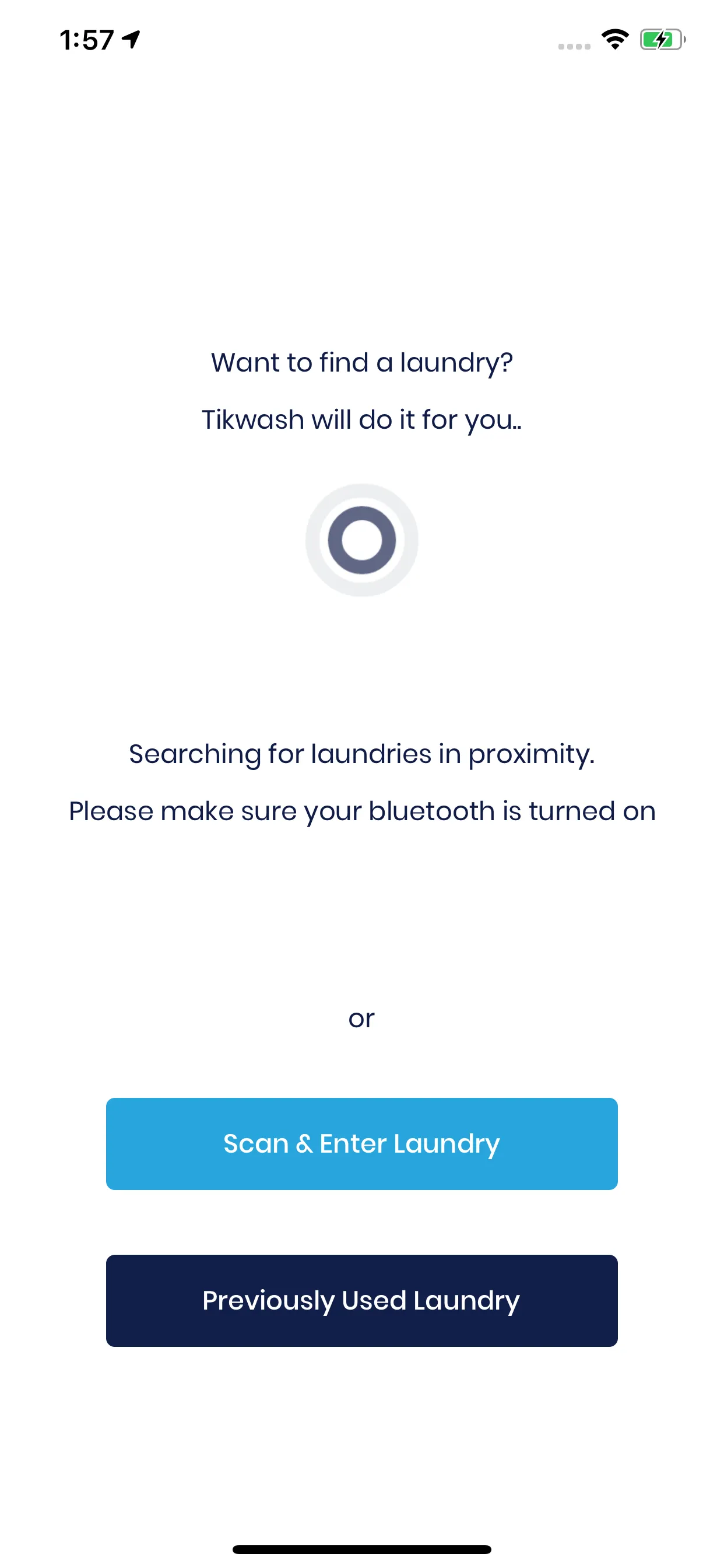
The same TikWash serves laundromats and car washes, each with its own app. It needs no central payment station on site.
How customers use TikWash
Everything happens in the app: the customer sees the machines, makes a choice, pays and starts.
Credit and payment
Customers pay from a personal credit balance in the app. There is no cash and no payment terminal at the machine.
For the operator
The operator portal brings every TikWash location together, with turnover and transaction history to follow up.
TikWash in VeMatics stations
TikWash runs on its own, or as part of a VeMatics payment station. Customers use the same app either way.
Wireless — the TBL100
In the wireless implementation, a TBL100 Bluetooth module sits at each machine. The customer’s phone carries the connection, so this path needs no permanent internet connection on site.
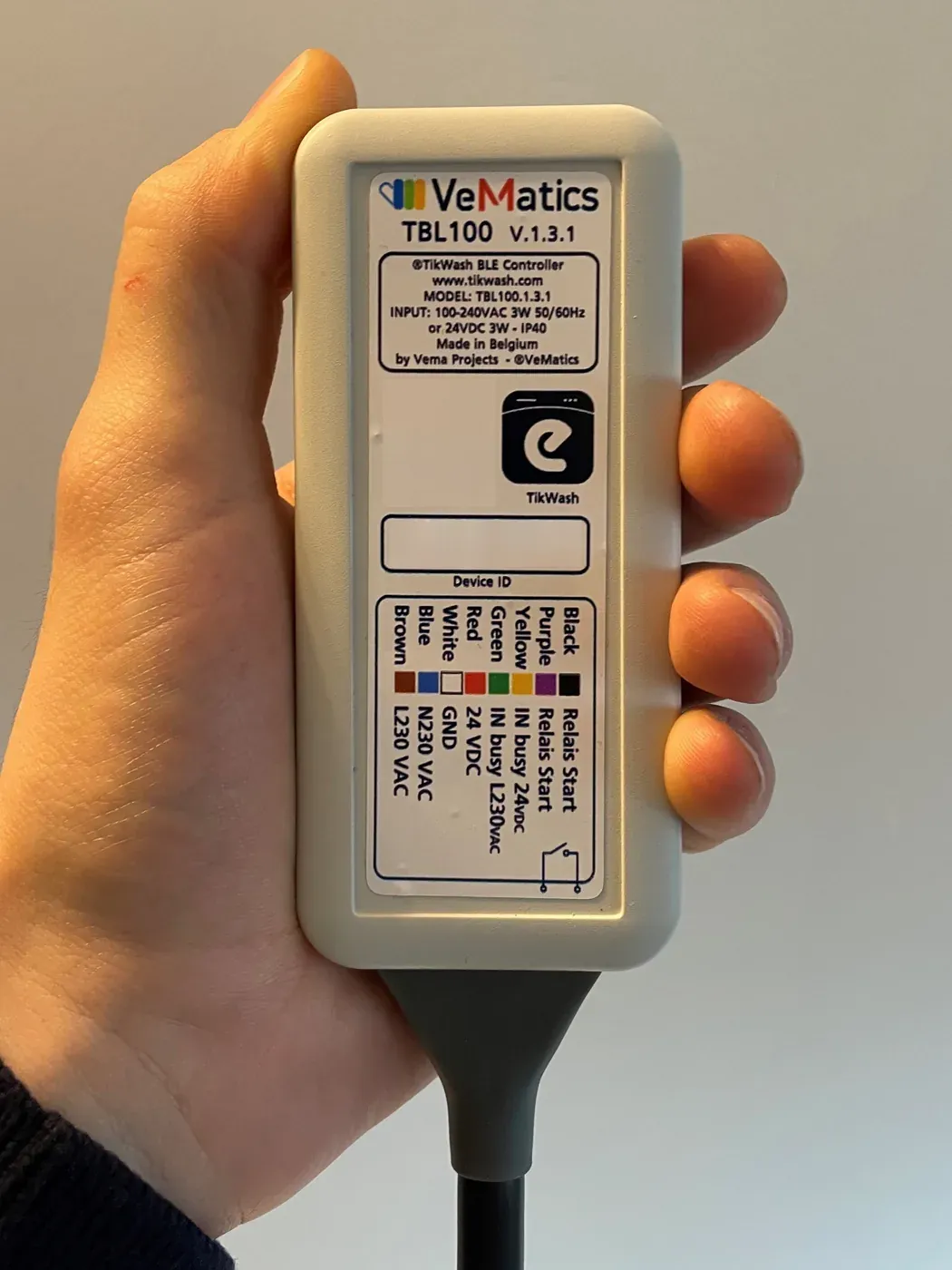
For the customer, the wireless and the wired implementation work the same way.
Wired — the TikWash Box
In the wired implementation, the machines are cabled to a TikWash Box on site, which is connected to the internet by cable.
The TikWash apps
TikWash has one app per sector — two versions of the same product, for iOS and Android.
Technical facts
Confirmed facts about TikWash and its two implementations. Each installation is set up for its own site.
- Sectors
- Laundromats and car washes
- Apps
- TikWash Laundry · TikWash Car Wash
- Platforms
- iOS · Android
- Sign-in
- Wireless implementation
- TBL100 · Bluetooth 4.2 LE
- Wired implementation
- TikWash Box
- Machines per TikWash Box
- No fixed maximum
- Station integration
- Standard from the CP200
Discuss TikWash for your site.
Tell us about the machines and whether the site has internet. We will look at which implementation fits — no obligation.